


Summarize Blog
Quick Summary
Test planning in software testing defines the scope, strategy, resources, and timelines that guide quality assurance efforts. A strong software testing plan improves requirement traceability, reduces risk, and keeps Agile teams aligned with sprint goals.
Effective test planning is the foundation of successful software development, ensuring that applications meet the highest software quality standards and function as intended. A well-structured test plan serves as a strategic guide, outlining the key components included in test planning in software testing.
This approach not only aids in the early detection of defects but also aligns testing activities with project goals, leading to improved resource utilization and timely delivery. In addition to a robust test plan, choosing the right test case management tool is essential for agile teams.
In this article, we will delve into the essential components of test planning and explore the key features to look for in a test case management tool for Agile teams, highlighting how these tools can streamline testing processes and enhance collaboration.
What is Test Planning in Software Testing?
A test plan is a critical element of software testing and a core part of software quality assurance, ensuring the quality and reliability of software products. The test plan defines the project scope, objectives, strategy, resources, and schedule for all testing activities.
The test plan is like a complete blueprint that guides the entire testing process. It confirms that all points of the software product are properly examined before the deployment. This documented plan helps all testers understand the steps included in the first, how the entire testing is done, and the criteria for success.
Here are the key components included in test planning in software testing are:
- Scope: This involves defining the product features, functionalities, and list of components that will undergo testing.
- Test Strategy: This outlines the approach and different types of methods for testing, including manual or automated testing.
- Test Objectives: Test objectives describe the main goals and desired outcomes of the testing process, such as verifying if the software is working as expected, identifying bugs, and validating performance.
- Test Resources: This includes two main aspects: team roles and the tools used. The team aspect specifies who is responsible for each testing activity, and the tools can include testing software and the necessary testing environments.
- Test Schedule: The test schedule is important for setting the deadlines for different stages of the testing process, including the start and end dates for each testing phase.
- Risk Management: This involves identifying potential risks that could impact testing, such as resource limitations, time constraints, and technical challenges.
- Test Deliverables: In test deliverables, it lists the documents and works that will be produced during the testing procedure like test cases, test scripts, test reports, and defect logs.
- Test Exit Criteria: This establishes the conditions that must be met to conclude the testing processes, such as fixing bugs and meeting performance benchmarks
What Are The Key Components of a Software Test Plan
Effective test planning in software testing requires more than listing tasks. A structured plan defines how testing will be executed, monitored, and evaluated throughout the project lifecycle.
The following components form the foundation of strong test planning best practices:
1. Scope and Objectives
The scope defines what will and will not be tested. Objectives clarify the purpose of testing, whether it is validating functionality, measuring performance, or ensuring compliance. Clear boundaries prevent scope creep and confusion during execution.
2. Test Strategy
The test strategy outlines the approach to testing, including manual and automated methods, testing levels, environments, and tools. In Agile test planning, the strategy must align with sprint timelines and incremental releases.
3. Resource Planning
This includes defining team roles, responsibilities, required software testing tools, and test environments. Proper allocation ensures that testing efforts are realistic and sustainable.
4. Test Schedule
A structured timeline defines when testing activities start and end, including milestones for different testing phases. This keeps delivery predictable and aligned with development cycles.
5. Risk Management
Identifying potential risks early helps teams prepare mitigation plans. Risks may include tight deadlines, unclear requirements, or environmental instability.
6. Test Deliverables and Exit Criteria
Deliverables include test cases, defect logs, reports, and coverage metrics. Exit criteria define the conditions required to conclude testing, such as defect thresholds and performance benchmarks.
What Should Agile Teams Look for in a Test Case Management Tool?
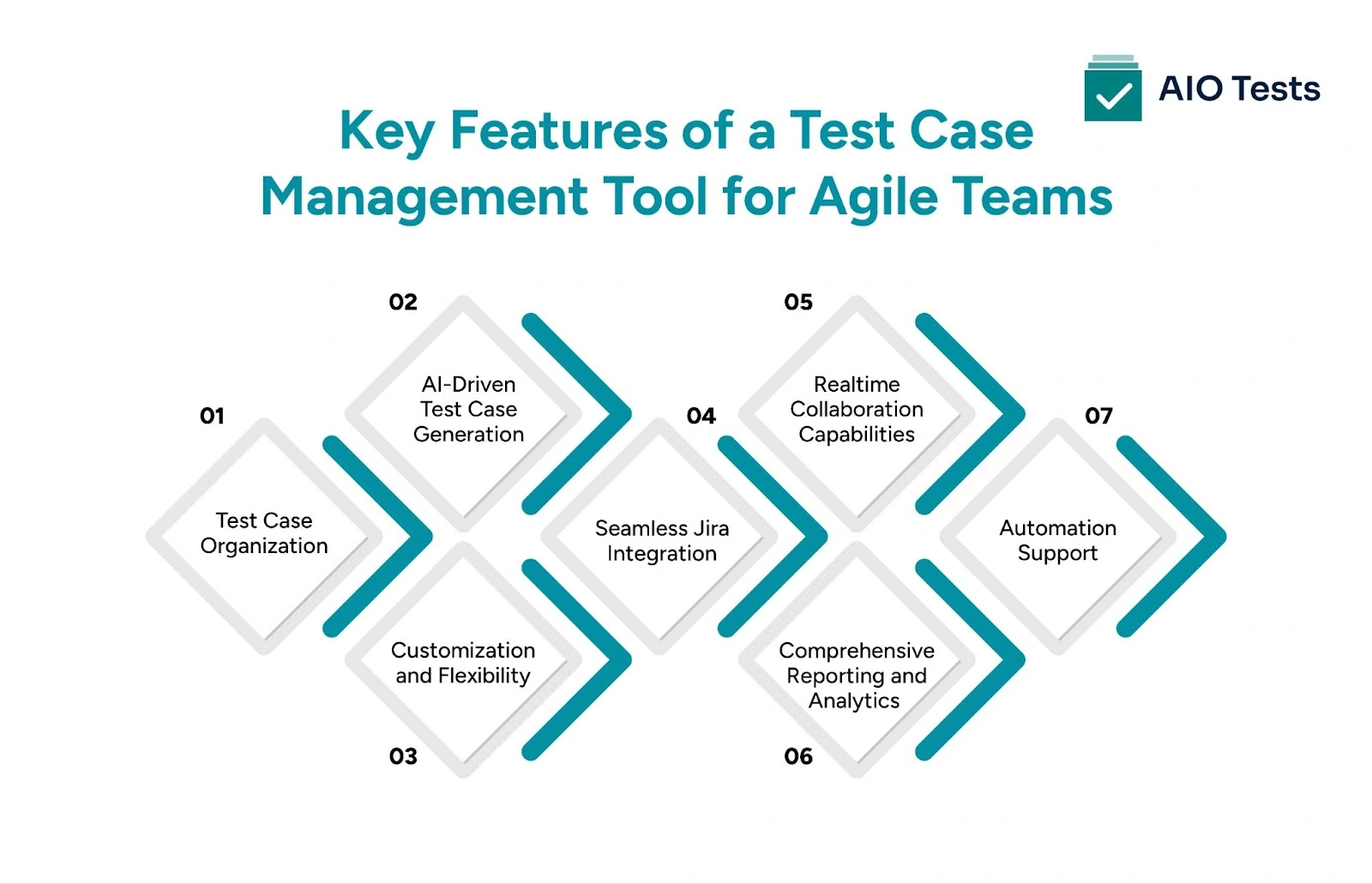
Test Case Organization
Effective test case management begins with a powerful creation and organization framework. In Agile environments, test cases must be more than static documents—they need to be living, breathing entities that can quickly adapt to changing requirements and sprint dynamics.
A sophisticated tool for test planning in software testing provides intuitive interfaces for creating detailed test cases that capture steps, expected results, and the underlying business logic and user scenarios. Hierarchical organization becomes crucial, allowing teams to:
- Group test cases by features, epics, or user stories
- Create reusable test case templates
- Tag and categorize test cases for easy retrieval
- Establish clear traceability between requirements and test coverage
The goal is to transform test case management from a mundane documentation exercise into a strategic quality assurance process that provides real insights and drives continuous improvement.
AI-Driven Test Case Generation
Artificial Intelligence is revolutionizing test case development by introducing smart, predictive capabilities. An advanced test case management tool that supports test planning in software testing can:
- Generate classic/BDD test cases from scratch
- Identify edge cases and potential failure points that human testers might overlook
- Recommend test case improvements based on historical defect data
- Predict high-risk areas that require more intensive testing
This AI-driven approach doesn't replace human testers but augments their capabilities, allowing them to focus on complex testing scenarios and exploratory testing that require human creativity and intuition.
Customization and Flexibility
No two agile teams are identical, and a one-size-fits-all approach to test management is counterproductive. Modern tools that support comprehensive test planning in software testing must offer extensive customization options:
- Configurable workflows that match specific team processes
- Customizable fields and metadata for test cases
- Flexible reporting templates
- Role-based access controls
- Ability to integrate with existing project management tools like Jira
The key is creating a tool that adapts to the team's workflow, not forcing the team to adapt to the tool's rigid structure.
Seamless Jira Integration
In Agile environments, testing is not a separate phase but an integrated, continuous process. A comprehensive test case management tool must provide Jira integration capabilities to maximize efficiency and transparency. These integrations eliminate manual work, reduce communication overhead, and ensure that testing is synchronized within the Agile workflow.
- Automated test execution triggers within Jira workflows
- Seamless synchronization of test cases and bug reports with Jira
- Generate comprehensive test reports and dashboards directly within Jira
These integrations eliminate manual handoffs, reduce communication overhead, and ensure that testing is a synchronized, transparent process.
Real-time Collaboration Capabilities
Distributed teams and remote work environments demand collaborative testing tools that transcend physical boundaries. Advanced features should include:
- Simultaneous editing of test cases
- Inline commenting and discussion threads
- Version control for test case documentation
- Instant notifications for updates and changes
- Shared dashboards and real-time progress tracking
By fostering a collaborative environment, these tools break down silos between developers, testers, and product managers.
Comprehensive Reporting and Analytics
Data-driven decision-making is the cornerstone of Agile methodologies. Powerful reporting and analytics transform raw testing data into actionable insights:
- Detailed test coverage metrics
- Defect trend analysis
- Performance benchmarking
- Predictive quality indicators
- Interactive, customizable dashboards
These analytics help teams identify improvement areas, validate testing strategies, and demonstrate the tangible value of quality assurance efforts.
Automation Support
Automation is no longer a luxury but a necessity in modern software development. A robust Test Case Management Tool should provide comprehensive automation support:
- Direct integration with test automation frameworks
- Support for multiple programming languages
- Ability to create, manage, and execute automated test scripts
- Detailed logs and debugging support for automated tests
By streamlining automation processes, teams can dramatically reduce testing cycle times and improve overall software quality.
What Are The Common Challenges in Test Planning
Test planning in software testing sounds structured in theory, but in practice, teams face recurring obstacles that affect quality and timelines. Even well-documented software testing plans can lose effectiveness when execution realities step in.
Below are the most common issues teams encounter.
- Changing Requirements: Project requirements often shift during development. New features are added, priorities change, and existing functionality is modified. When this happens, previously written test cases may no longer reflect the current scope, leading to gaps in coverage.
- Limited Time and Resources: Deadlines rarely move. Testing time is usually the first to shrink when development runs late. With fewer resources and fixed release dates, teams struggle to maintain depth in validation.
- Unclear or Incomplete Documentation: If requirements are vague or outdated, test planning becomes guesswork. Testers may interpret functionality differently from developers, which increases rework and missed defects.
- Environment Issues: Testing environments do not always match production. Configuration differences, unstable builds, or missing data can delay execution and affect test accuracy.
- Growing Regression Scope: As products expand, regression suites grow larger. Without careful planning, regression cycles become heavy and difficult to manage within sprint timelines.
- Communication Gaps: When product owners, developers, and testers are not on the same page, priorities become unclear. This leads to misinterpretation of scope and inconsistent test coverage.
Conclusion
In summary, there are innumerable test case management tools for agile teams in the market designed to simplify your testing process and make your tasks easier.
For those looking to take full advantage of a feature-rich tool that will empower your team to churn out high-quality software products in record time, AIO Test could be just what you need. AIO Tests is a comprehensive QA and test management app for Jira, designed to streamline every stage of the testing process with AI-driven features that enable teams to automate and optimize testing.
- AI-Assisted Case Creation: Automatically generate relevant test cases and link them to Jira requirements, saving valuable time.
- Case Options: Generate classic or BDD-style test cases to target different test scenarios.
- Case Improvement: Use AI suggestions for step additions to continuously refine test cases.
- Grammar and Translation: You can improve the grammar and translate test cases that enhance accuracy and readability.
- Customizable Templates: You can quickly create end-to-end, positive, or negative test cases with just a few clicks.
- Multi-language Support: Generate test cases in different languages with AI customizations for global teams.
- Automation – CI/CD Integrations: AIO Tests integrate with CI/CD pipelines and automation frameworks. REST API support enables programmatic test management, while Postman API test reporting automates result logging. Plug-and-play reporters ensure compatibility with various testing tools, streamlining automated test execution.
- Customization: AIO Tests offers extensive customization, including workflow configuration, custom fields, and user role management. Teams can tailor the platform to their testing needs while ensuring structured access control.
- Comprehensive Reporting: Generate 20+ tailored qa testing reports to monitor project progress, assess team performance, and ensure complete traceability across manual and automated testing.
AIO Test is designed to help teams easily integrate AI into their workflows, which speeds up software testing and increases effectiveness. If you want to find out more, feel free to contact us at help@aiotests.com or schedule a demo today.

FAQ
- What are the key components of a test plan?
The key components of a test plan include scope, objectives, test strategy, resource allocation, schedule, risk assessment, deliverables, and exit criteria. These elements define what will be tested, how testing will be performed, who is responsible, and when activities will take place.
- What is the difference between a test strategy and a test plan?
A test strategy defines the overall approach to testing, including testing levels, methods, and standards followed across projects. A test plan, on the other hand, is project-specific and outlines detailed execution steps, timelines, resources, and deliverables. In simple terms, the strategy sets the direction, while the plan defines the execution.
- Why is test planning important in software testing?
Test planning in software testing ensures that quality goals are clearly defined before execution begins. It reduces confusion, prevents scope gaps, and helps teams allocate time and resources effectively. Without structured planning, testing becomes reactive, increasing the risk of defects reaching production.
- How do you write a software test plan step by step?
Start by defining the project scope and test objectives. Next, outline the test strategy, including methods and tools. Assign roles and resources, set timelines, identify risks, and define deliverables and exit criteria. Review the document with stakeholders to confirm expectations before execution begins.
- What are common mistakes in test planning?
Common mistakes include unclear scope definition, unrealistic timelines, ignoring risk assessment, and poor documentation. Another frequent issue is failing to update the plan when requirements change. In Agile environments, neglecting regular reviews can quickly make a software testing plan outdated.


.svg)
